


By no means is this article able to cover all the UK fire door regulations in comprehensive detail, but it will give you the general gist of what you need to do and conform to.
Your first question is probably, when are fire doors required, and the answer is. A fire door is required wherever it will help protect a fire escape route. Here is what you need to know.
Fire Doors in Your Own Home
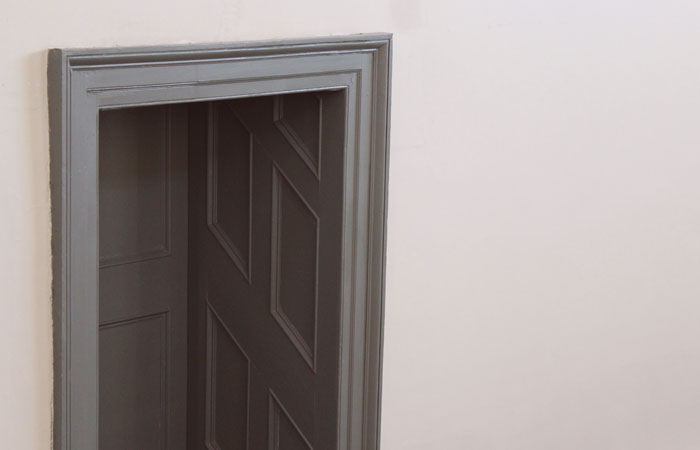 Let’s say you live in a semi-detached bungalow. In this case, there is no need for a fire door because almost all routes lead to an exit, be it a door or window. Even if you are a landlord renting out a house, there is still no need for a fire door.
If you are a landlord, then you must provide a smoke detector in at least one room or you will be fined.
Other fire safety measures are at your discretion unless you own a property with multiple abodes (like a block of flats or shared housing).
In those cases, you will have to conform to commercial rules on fire safety, which includes things like fire alarms, smoke detectors, fire extinguishers, fire doors, fire escapes and so forth.
Protecting Escape Route
Contrary to popular belief, a fire door’s primary purpose is not to protect you or your property from fire. It is to protect escape routes from fire.
Its job is to hold back fire for as long as possible to stop it spreading into areas where people would otherwise escape.
Take the example of a block of flats with a stairwell. People have to run past other people’s front doors and then down the stairwell.
As a result, you are legally obliged to have fire doors on each of the flats, and a fire door on every access to the stairwell.
Try to imagine a bellowing fire coming out of somebody’s flat. If it bellowed out the door, people couldn’t get past and may end up trapped in the flats.
Again, imagine a bellowing fire in a hall that had found its way into a stairwell.
The entire stairwell may become out of action thanks to the smoke and heat.
Fire doors are installed to stop these hindrances to escape.
Commercial and Industrial Buildings
 There is a slew of regulations for commercial and industrial buildings. They include things like a requirement for fire extinguishers and fire axes.
There are also regulations for industrial buildings that include methods for escape on both horizontal and vertical planes.
However, there may be no need to worry for some commercial enterprises.
For example, if your shop is a ground floor shop with a door in the front and one in the back, then fire doors are not needed simply because the doors themselves are part of the escape route.
You would be required to have fire extinguishers and maybe a sprinkler system, but not fire doors.
On the other hand, if you had a storeroom full of alcohol, then that door may need a fire door on it.
As a business, you may also need your staff to have adequate training, and you will probably have to undergo fire-risk assessment tests.
If you run a hotel or a block of flats, then you will need to ensure all fire-safety protocols are in place, from posted maps of escape routes to fire alarms that can be tripped both automatically and manually.