


People distant from architectural circles often romanticise the profession of an architect. On the one hand, architects create masterpiece buildings, extravagant skyscrapers and airports. Those kinds of projects require a tremendous amount of creativity and a lot of engineering knowledge. On the other hand, architects also design regular houses and boxy blocks of flats. They design everyday spaces – and plenty of people might look at a common office space and think to themselves, “I could do better than that.”
With the rise of “Makers” and the growing popularity of big DIY projects, it’s not surprising that more and more people are considering taking on their own Grand Designs projects at home. But what do you need to consider before getting out the sledgehammer and taking out a load-bearing wall?
We’ve gathered a list of 7 characteristics that you’ll find in the most successful architects and that you should consider cultivating before starting your architectural project.
#1. Mathematical thinking
Geometry, algebra, and trigonometry are all important in architectural design. Professional architects use mathematical formulas to prepare their blueprints or early sketch drawings.
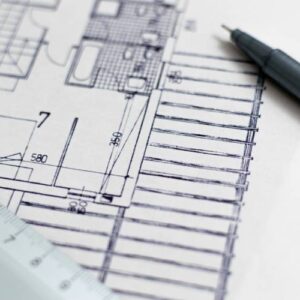 They also analyse the likelihood of problems the construction crew may encounter as they bring the design concept to life in three dimensions. However, rather than just being good at maths, architects need to be skilled at mathematical thinking. Anyone taking on an architecture project must be able to solve everyday issues with numbers. Will the components of the structure fit together properly? Is there enough room for another door here? Will that staircase comfortably take you to the next floor?
If you’re going to manage your project solo, you’ll also need to calculate material needs and costs. Some of this is basic problem-solving, but being comfortable with maths (or knowing someone who can support you) is key.
#2. Design Skills
Good design skills are a must-have in the field of architecture. Many newcomers mistakenly think that the architect’s job is to create something beautiful. That’s true, to some extent, but along with being visually stunning, a constructed object must also be viable and functional. Moreover, the architect’s vision and ideas must be tailored according to the clients’ needs and demands. When you’re the client and the architect, that’s much easier. You know what you need from your space and how you’ll use it day-to-day. A good architect understands how to combine great design with functionality and can compromise when needed. Subscribing to architecture journals or following major architecture firms on social media will help develop your instinct for great design. Their projects might also inspire you.
#3. Inventive mind and creativity
One of the essential characteristics of an architect is creativity. A modern architect is expected to construct cutting-edge buildings that push aesthetic boundaries to a new level while staying within safety regulations. The only way to achieve this is to think creatively.
 During their work, architects use both the left and right sides of their brains to harness their logical, mathematical thinking and their innovative approach. A good architect will think outside the box and present bold and fresh perspectives on existing concepts. Architects spend a lot of time solving problems. For instance, when there isn’t enough space, how to get good light into an area, how to create something stunning on a low budget or with only sustainable materials.
A flexible and inventive approach will help you master all the challenges you’ll meet during your project.
#4. Leadership and communication skills
Successful architects are effective leaders. When many people are working on a project, leadership qualities are essential. An architect should explain a vision in a way that attracts stakeholders while also motivating the team. Dealing with difficult situations and addressing challenges are crucial aspects of architects’ work. As an architect, you might have to stay in touch with many professional partners, tradespeople, structural engineers, local government officials and construction managers throughout the project. All of them have their problems and interests. Working in a team and dealing with different people require a high level of social competence. An architect has to be sure that everyone is on the same page – it’s critical for the effective completion of a project. Even when you’re only managing a relatively small project, you could still have to balance the diaries and workload of several subcontractors at once. Professional architects use architecture project management software to support them, as pen and paper schedules can be unreliable. But even when you have the support of software, there’s no replacement for top-notch leadership skills.
#5. Teamwork
Teamwork is another vital trait of a good architect, right behind communication. Architects can finish the design on their own, but they need to collaborate with others at some point. That list of “Others” include the following people:
 Construction team – they’ll keep you notified about material prices as well as challenges they are facing when building to your designs.
Engineers – sometimes, you’ll want an expert engineer to check your design to ensure it’s structurally sound before construction begins.
Local authorities and surveyors – they protect the local environment from violations and ensure that construction is in accordance with regulatory requirements. Before starting a major project like a loft conversion or house extension, you’ll often need their permission.
These individual specialists can bring you problems – but if you’re good at teamwork and collaboration, they can also be your greatest allies.
#6. Strategic thinking and understanding of human psychology
Architects set a workflow for the entire construction project design team. As creative people, they have a deep knowledge of architecture and the processes involved in implementing a project into reality. Besides these basic professional skills, architects must be flexible and positive. They will have to solve various problems from contractors, regulatory authorities, designers, customers, and other organisations. They need to manage and coordinate the work of the construction site, monitor the compliance of the work performed (field supervision), and adhere to the schedule. An architect must be ready for unexpected situations that can interfere with project completion dates and cost management. Management skills, strategic thinking, knowledge of psychology, and understanding of all micro nuances of the construction industry help an innovative architect solve the project’s managerial tasks.
#7. Open-mindedness
Congratulations, just by considering taking on an architecture project, you’re already fulfilling this final quality! Outstanding architects desire to learn new things and never let their existing skillset stagnate. By mastering new skills, you’ll be able to design and manage increasingly complex projects.
 In addition to creativity and problem-solving, anyone considering taking on multiple architecture projects should keep up-to-date on the latest construction technology and design software innovations. IoT, AI, AR & VR, drones, 3D printing, BIM – these technologies are familiar to all innovative architects and are increasingly used in real projects. Moreover, architects were the first to appreciate the advantages of using mobile devices on construction sites.
In the beginning, mobile devices were used mainly to visualise the projects to clients, but now tablets with professional construction software have become a full-fledged working tool. Such construction software is not limited solely to graphic solutions like LIRA, Compass, Revit, ArchiCad, Renga, or AutoCad. Architects also use project management programs that support BIM technology, for example, PlanRadar, BIM 360, ArchiCad, Revit.
Takeaway
If you’re planning to take on an architecture project, it’s important to know there’s more to it than sketching out designs. Modern architects must possess both design and engineering knowledge and soft skills (such as communicating, implementing innovative ideas, strategic thinking and flexibility). To become an outstanding architect, a person should have a combination of creative thinking and imagination, supported by confidence in maths and physics and a high level of curiosity. Finally, leadership and teamwork qualities are vital to ensuring your projects turn out successfully.
That sounds like a lot, but if you start small and build your way up, you can confidently design and manage your home improvement projects in no time.