

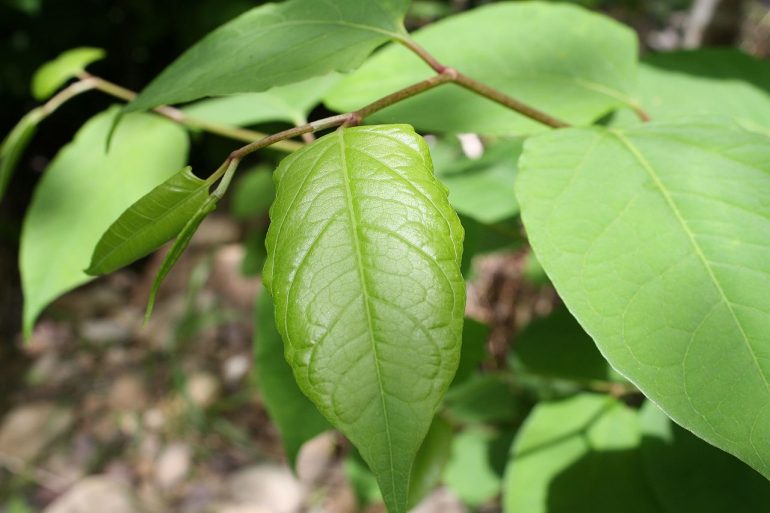
Properties and Japanese knotweed just do not go together. This is one rapidly growing and destructive non-native plant you do not want anywhere near your home. If it’s already there, you’ll need the very best Japanese knotweed eradication solutions to get rid of it. Not only can the weed cause structural problems to a property, but it can also badly affect its value so removing Japanese knotweed should be your priority.
In one recent occurrence, the spread of Japanese knotweed from an unregistered and vacant site beside an elderly woman’s home in Wales ended up knocking the property’s value in half. The semi-detached home of Audrey Abraham, 91, had been worth £80,000, but when the time came to sell it to pay for a care home for her, it was worth only £45,000.
Those looking to buy a property that has Japanese knotweed on it, or evident in an adjacent plot of land, face similar difficulties: they may not get a mortgage. If “Japanese knotweed” is mentioned in a surveyor’s report, a mortgage provider will usually insist that a specialist Japanese knotweed eradication company remove it from the property and provide a guarantee that it won’t return in the near future.
Spotting Japanese Knotweed on a Property
You might suspect you have a growing infestation of Japanese knotweed either on your property or encroaching from a neighbouring one. You may be correct in your assumption, but you could also be wrong — and highly relieved.
As a general rule, if you spot a plant you’re not familiar with growing in your garden or nearby, shooting up all over the place incredibly quickly, you may have a problem.
The leaves of Japanese knotweed are also a key identifying factor, as they are heart-shaped. This is one of the attributes that led to its introduction to the UK in the 1800s and its subsequent adoption by members of high society who thought it was a pretty and even fashionable plant.
Japanese knotweed starts growing in the spring, with purple or red shoots appearing from the ground that look somewhat like asparagus. Soon, they turn green and take on the appearance of bamboo stems as they shoot up.
By early summer, Japanese knotweed can have grown to a towering height of up to three metres, flowering late in the summer before turning dormant for the winter. By then, the leaves will have fallen off and the canes will be dark brown in colour.
There will be no more growing until the following spring.
 Japanese Knotweed Eradication Guarantee
 Japanese Knotweed Eradication Guarantee
Now we come to how you get rid of Japanese knotweed from a property and stop it coming back.
Some people try to do it themselves, but it’s not an easy task and is often prone to failure, as a complex underground shoot system could very well start re-growing. Plus, a financial institution may well demand that an expert Japanese knotweed eradication firm carry out the work.
Whether for residential properties or commercial premises, the best Japanese knotweed eradication firms deploy a combination of herbicide treatments — necessary where the land cannot be disturbed — and all-out dig-outs of the plant. Dig-outs are essential in cases where previous eradication efforts have failed.
They can be done in a matter of days and with little or no disruption to surrounding areas.
Equally importantly, leading Japanese knotweed eradication companies will have developed such effective methods of getting rid of the weed that they are able to provide insurance-backed guarantees.
This is to ensure it will not return for a period that’s typically around 10 years, and if it does, additional work is covered. It’s enough to satisfy not just loan providers, but homeowners and businesses, too, giving them ultimate peace of mind that the problem has finally been brought under control.