

When selling a property, every person wishes to sell their property for its maximum true value. They choose estate agents based on the one that offers the best and biggest initial valuation. This may either turn out to be a big mistake or a good decision.
Sometimes, an overpriced property will result in a longer wait, even before other offers come. How do estate agents arrive at the best, realistic price? One that reflects the worth of the property and, at the same time, maximizes what the seller wants to achieve the worth.
Some estate agents value countless properties during their housing profession, which they can carry out almost on autopilot. On the other hand, they consider other factors, which hold the key to the precise market value of the property.
Read on below to learn what estate agents look out for when they value your London property.
1. Indoor Decorative Order
One of the very first things that you as an estate agent need to consider is what the decorative order of the property looks like, the one you have to sell. Anything can make your property appear immaculate, smallest details like clutters and carpets to others like wallpaper peelings; each one of these items can knock money off from the actual worth of the property.
2. Comparable properties (comps):
Estate agents often look at recent sales of similar properties in the same area to assess market trends and establish a comparative value for the property in question.
3. Market conditions
The current state of the property market can influence valuations. Supply and demand, interest rates, and economic conditions all play a role in determining the perceived value of a property.
4. Historical sales data
Agents may consider the property’s sales history and any improvements or renovations made since the last sale.
5. Modern Kitchen
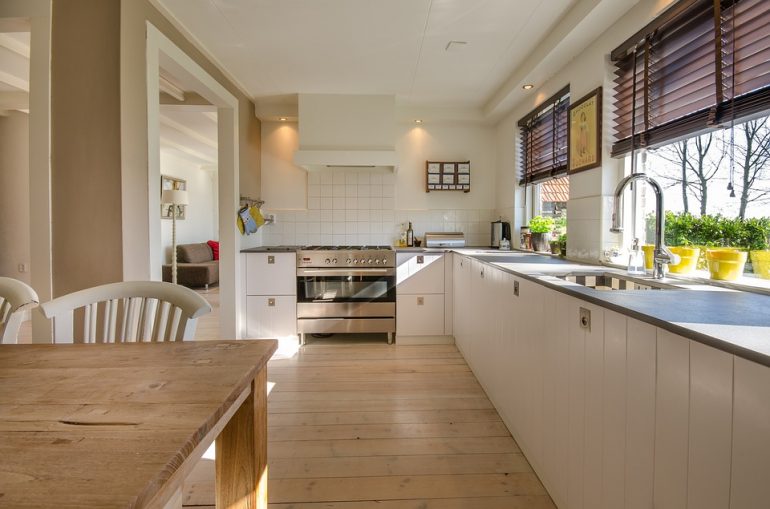
The kitchen is often considered one of the most important rooms when it comes to property valuation. A well-designed and functional kitchen can significantly impact the overall value of a property.
While the kitchen is crucial, it’s important to consider it within the context of the overall property. A well-maintained and aesthetically pleasing kitchen is an asset, but other factors such as the property’s location, size, overall condition, and the presence of other desirable features also play a significant role in determining its value. The importance of the kitchen in property valuation may vary among buyers, but in general, a well-appointed kitchen is a key selling point in the real estate market.
6. The use of space
Keep in mind how spacious an accommodation is and how flexible it plays an important role when estate agents come in to value your property. They consider factors like whether the accommodation will suit families as a home or one with a stretching point. In addition, they evaluate the number of bathrooms and bedrooms it has and whether it comes with an extra TV lounge or room.
7. Potential for Modification
Estate agents also evaluate whether the property has the right potential for expansion or modification. If you do not take proper care, this can take thousands off the price of your property. Is the property listed as a complete building or one in a conservation area with a past of rejection? Such factors are important to consider, however, if you have planning permission for the conservatory, your agent will consider this and arrive at the best value for your property. Estate agents also view the complete square footage, which is vital.
8. The Number of Bathrooms
When your estate agent comes in for a valuation, they would also consider whether your property has enough bathrooms and is spacious. In recent years, the total number of bathrooms has become quite important, so even small modern bathrooms (en-suite) can help and add much more value.
10. Transportation
When valuing a property, another aspect to consider is whether your property has a good transportation link. House hunters will consider their transportation as well as how long it will take them to commute back to their homes after work. In this regard, if a property is located poorly, its value will decrease quite low. In some cases, even a cross rail can help to add more value to the price of your property.
11. Proximity to Top Schools
You also have to consider whether your home is located in a school catchment area (a sought-after one or not). Proximity to the best schools in the area always attracts buyers, and it is an integral aspect of valuing properties. In addition, most parents who hunt for houses tend to go through OFSTED reports in order to sift through some of the best options and a good estate agent needs to do the exact same homework.
12. Garden Space
A garden helps to add more value to the price of a property. If kept well, it can attract buyers, and if not, it puts off prospective buyers. However, a neat, beautiful and pretty garden will be priceless when it comes to the marketing of the property.
13. Energy efficiency
The energy efficiency of a property, as indicated by its Energy Performance Certificate (EPC) rating, can influence its value, especially with increasing awareness of environmental considerations.
It’s important to note that property valuation is not an exact science, and different estate agents may have slightly different methods and criteria. Additionally, external factors such as economic changes and market trends can also affect property valuations. It’s advisable to consult with multiple agents and do thorough research to get a comprehensive understanding of a property’s value.