

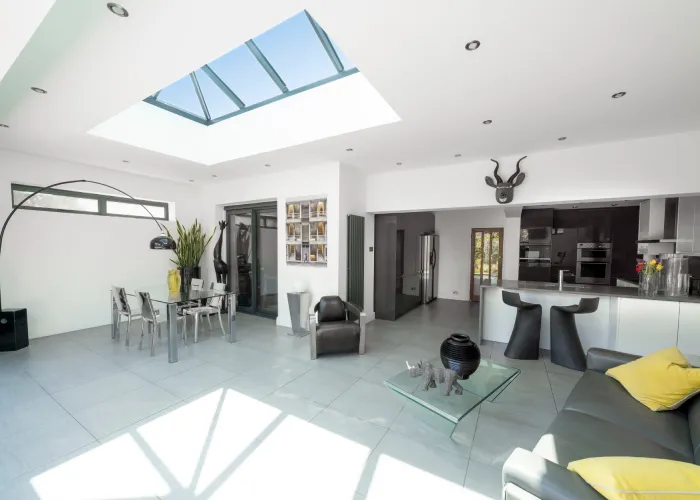
When planning a home renovation or extension, maximising natural light is a key consideration. Two popular options for introducing more daylight into a property are rooflights and roof lanterns. Both offer distinct benefits, and the right choice will depend on roof structure, design preferences, and energy efficiency needs. In this guide, we explore the differences between rooflights and roof lanterns, their advantages and disadvantages, and which option is best for your home.
What is a Rooflight?
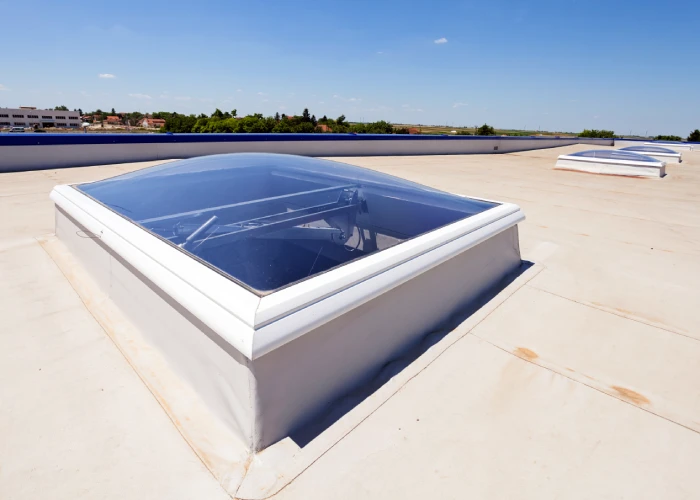
A rooflights is a glazed panel that sits flush or slightly raised within a flat or pitched roof. It allows natural light to enter directly from above, brightening up interior spaces without significantly altering the property’s architectural design. Rooflights offer the freedom of a sleek, frameless design that blends seamlessly with modern and traditional homes.
Advantages of Rooflights
Maximises Natural Light: Rooflights allow light to flood into rooms from above, making them an ideal choice for darker spaces or areas where vertical windows are impossible.
Discreet and Modern Aesthetic: Their flush, low-profile design integrates seamlessly with a building’s exterior, offering a clean, contemporary look.
Energy Efficiency: Triple-glazed rooflights provide superior thermal insulation, reducing heat loss in winter and preventing overheating in summer.
Flexibility in Placement: Rooflights can be installed in various locations, including kitchens, hallways, loft conversions, and extensions.
Option for Ventilation: Opening rooflights improves airflow, helping to regulate temperature and enhance indoor air quality.
 Disadvantages of Rooflights
 Disadvantages of Rooflights
Limited Architectural Impact: While roof lights provide excellent lighting benefits, they do not create the same dramatic effect as a roof lantern, which adds more space and grandeur to a room.
May Require Structural Adjustments: Some roof lights may need reinforcement, particularly in older properties or where large glass panels are used.
What is a Roof Lantern?
A roof lantern is a three-dimensional glazed structure, typically featuring multiple panels of glass joined at an angle to create a pyramid or rectangular shape. Roof lanterns protrude above the roofline, making them a striking architectural feature that enhances both aesthetics and functionality.
Advantages of Roof Lanterns
Architectural Statement: Roof lanterns are stunning design features that add height and grandeur to an extension or renovation.
Panoramic Views: Their multi-panelled design allows for a wider field of vision, bringing in even more light than a standard rooflight.
Increased Ceiling Height Perception: The raised design creates the illusion of a higher ceiling, making rooms feel more spacious and airy.
Traditional and Contemporary Appeal: Roof lanterns suit both period properties and modern homes, adding elegance and style.
Disadvantages of Roof Lanterns
More Complex Installation: Roof lanterns require additional structural support due to their structure, which can increase the overall project cost.
Potential Heat Gain: While high-performance glazing helps, roof lanterns can be prone to heat build-up in warmer months if not properly designed.
Not as Discreet as Rooflights: Their raised design makes them more noticeable from the exterior, which may not suit all architectural styles.
Rooflight vs Roof Lantern – Which One Should You Choose?
The decision between a rooflight and a roof lantern depends on several factors:
1. Type of Extension or Renovation
For single-storey extensions: Rooflights are an excellent choice for maintaining a minimalist design while allowing light to flood in.
A roof lantern can create a striking centrepiece in open-plan kitchens and dining areas, enhancing space and style.
For loft conversions: Rooflights work best as they fit seamlessly into sloped roofs without requiring additional height.
2. Energy Efficiency Considerations
If thermal insulation and energy efficiency are priorities, rooflights such as modern triple-glazed models provide superior performance, helping to reduce heat loss and lower energy bills.
3. Aesthetic Preferences
If you prefer a sleek, modern look that blends into your roofline, opt for rooflights.
If you want to make a bold architectural statement, roof lanterns offer a more eye-catching design.
4. Budget and Installation
Rooflights are generally more cost-effective and easier to install than roof lanterns, making them ideal for budget-conscious homeowners.
Roof lanterns, while more expensive, add a luxurious and elegant feel to a property, potentially increasing its market value.
Rooflight or Roof Lantern: What is Right for Your Home
Both rooflights and roof lanterns have their unique benefits, and the best choice depends on your home’s design, functional needs, and personal preference. Rooflights provide a sleek, modern solution that maximises natural light while maintaining a low-profile aesthetic. Roof lanterns, on the other hand, offer a striking architectural feature that enhances both style and spaciousness.